
Peptides are short chains of amino acids, the same building blocks that form proteins. While proteins may contain hundreds or thousands of amino acids folded into complex structures, peptides are smaller and often easier to study in controlled laboratory settings. Their size, sequence and chemical properties can influence how they interact with receptors, enzymes and other biological systems, which is why they are widely used as research tools.
What does “research grade” mean?
When a peptide is described as research grade, it means the material is supplied for analytical, laboratory or experimental work rather than as a licensed medicine, food or cosmetic for personal use. Researchers should review available product specifications, purity information and any Certificate of Analysis provided for the relevant batch. Research-grade products must be handled by suitably trained people using appropriate laboratory procedures, risk assessments and protective equipment.
Common categories of research peptides
Peptide research covers a broad range of compounds. GLP-1 analogues are commonly investigated in metabolic and receptor-signalling studies. Growth-hormone-related peptides are used to explore endocrine pathways and cellular responses. Cosmetic peptides, including copper peptides and short signalling sequences, may be examined in skin, collagen and formulation research. Other categories include antimicrobial peptides, neuropeptides, peptide fragments and custom sequences developed to test a specific scientific hypothesis.
How peptides are supplied
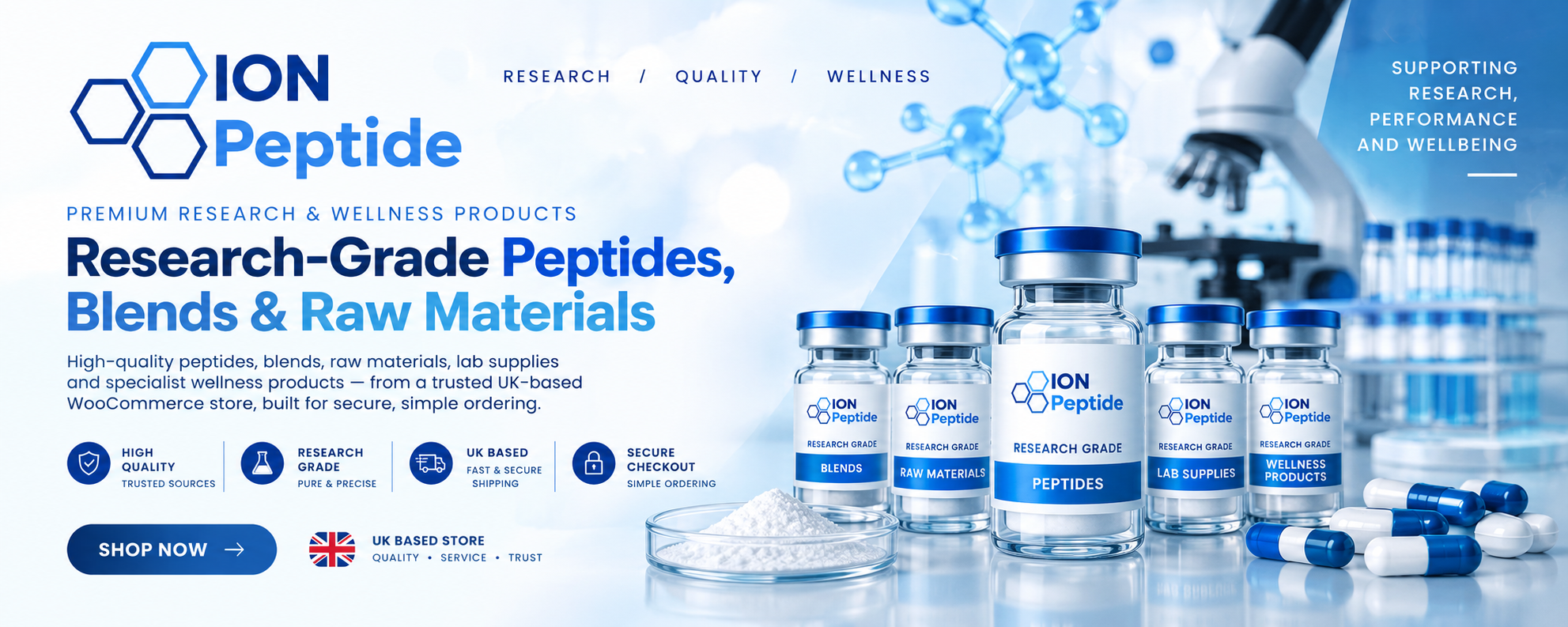
Many research peptides are supplied as lyophilised powder. Lyophilisation removes water under controlled conditions, helping to improve stability during storage and transport. The powder is commonly contained in a sealed vial and may appear as a small cake or residue at the bottom. Some products are supplied in ready-made solutions, creams, drops or raw material formats. Always follow the product-specific documentation because packaging, concentration and storage requirements vary.
Responsible research use
Good laboratory practice begins with checking the label, batch details and storage instructions before opening a product. Keep accurate records, use calibrated equipment, prevent cross-contamination and dispose of materials according to local laboratory rules. A product description is not a substitute for a validated protocol or professional safety assessment.
All ION Peptide products are offered strictly for research purposes only. They are not intended for human or animal consumption, self-administration, diagnosis or treatment. Buyers are responsible for confirming that their planned work is lawful and appropriate in their jurisdiction.
To explore available formats and current product information, browse the ION Peptide shop.
Before beginning any study, researchers should define the question, select suitable controls and document the intended analytical method. Recording lot numbers, preparation dates and observations makes results easier to compare and supports repeatable, transparent laboratory practice.